
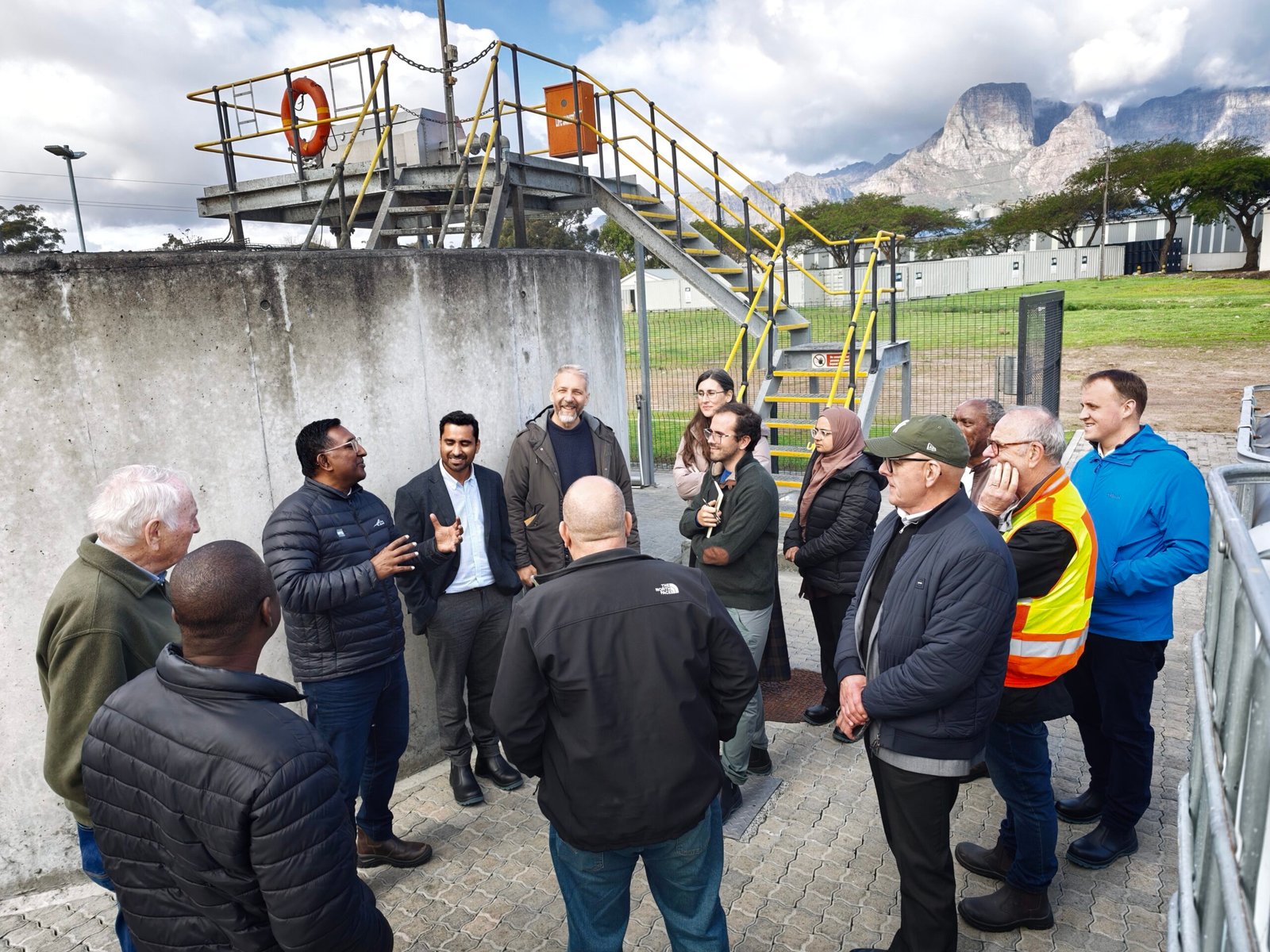
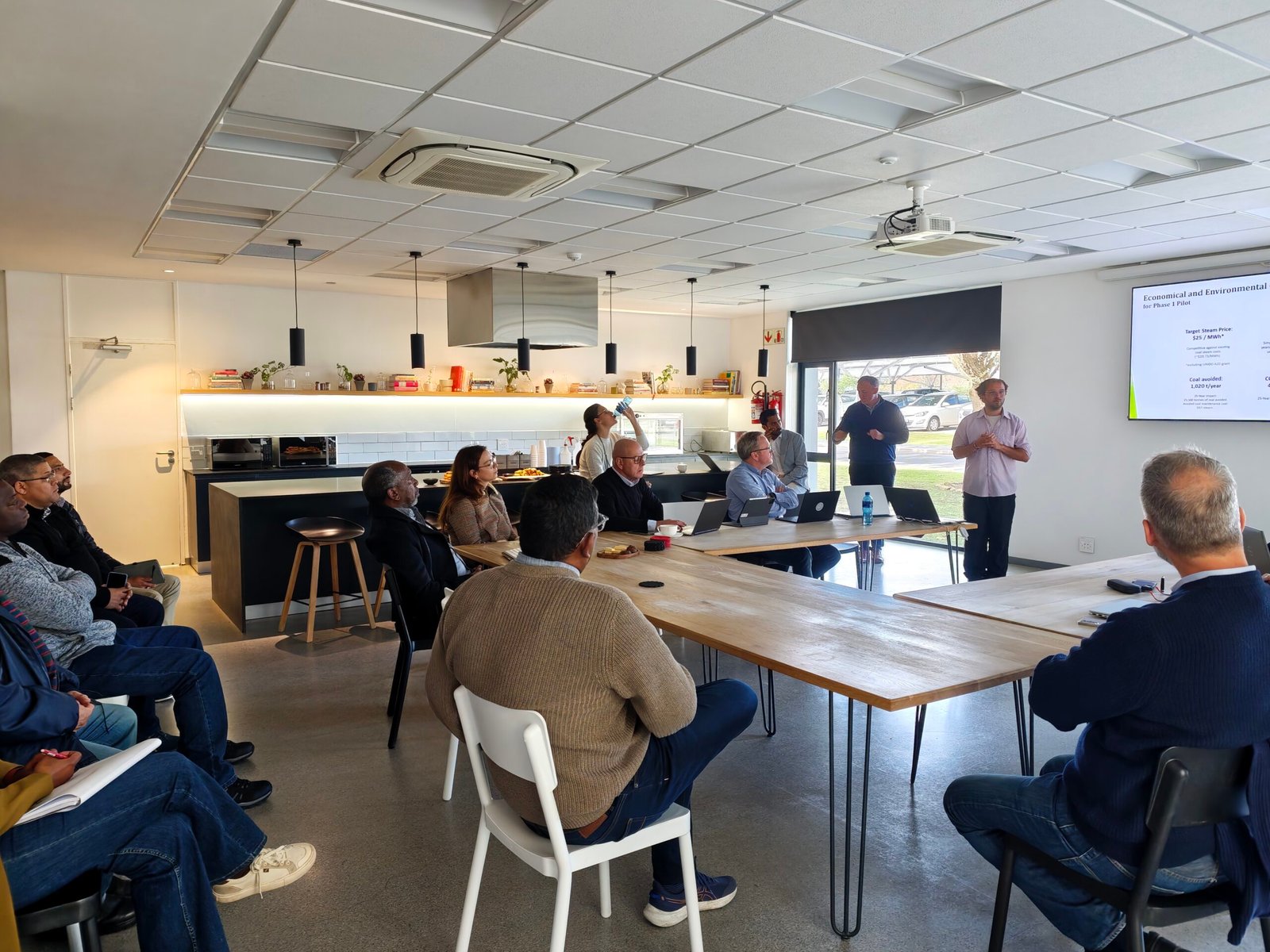
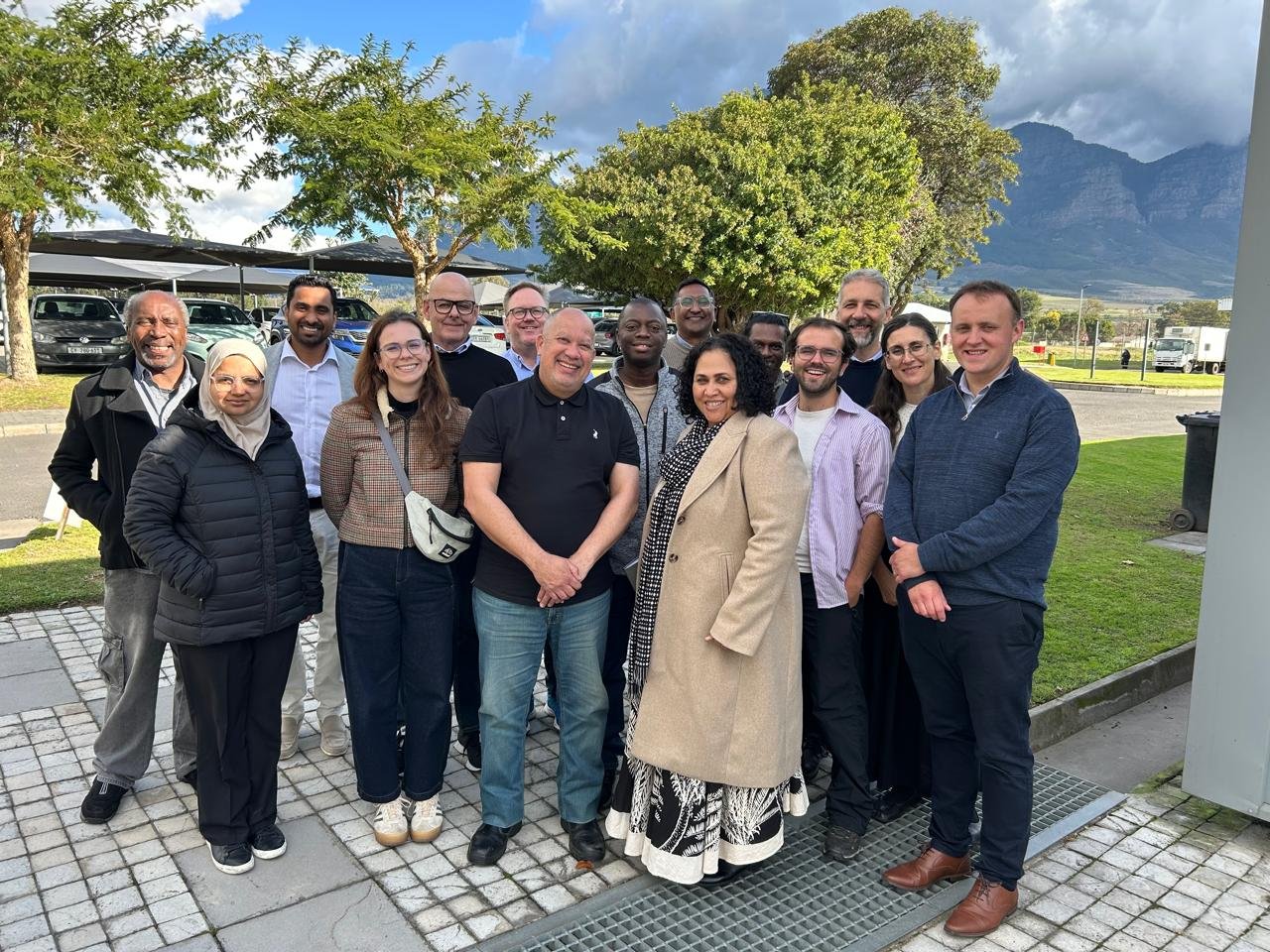
Site Visit 2026
~80%
400 kW
~8 barg
25–30 m
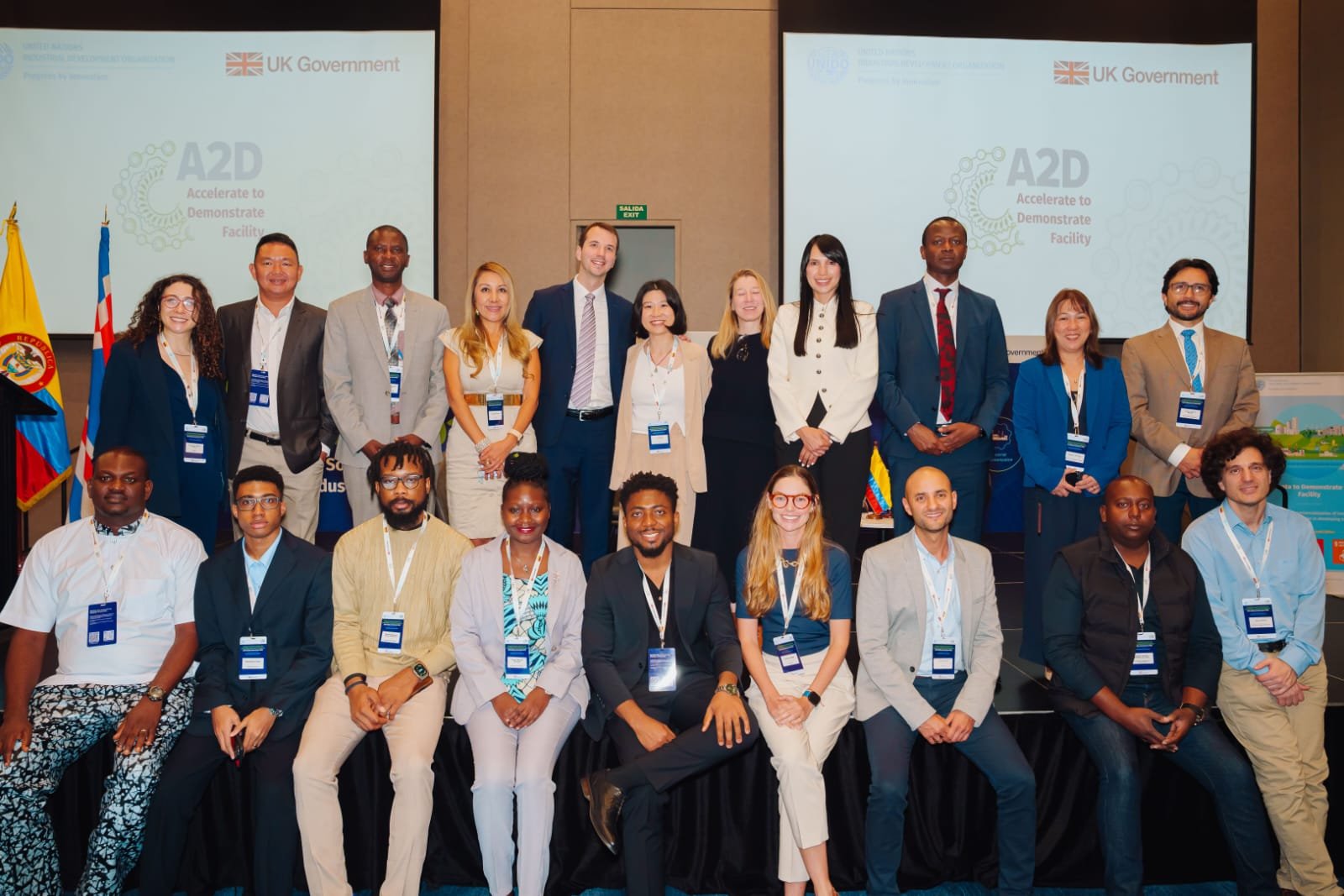
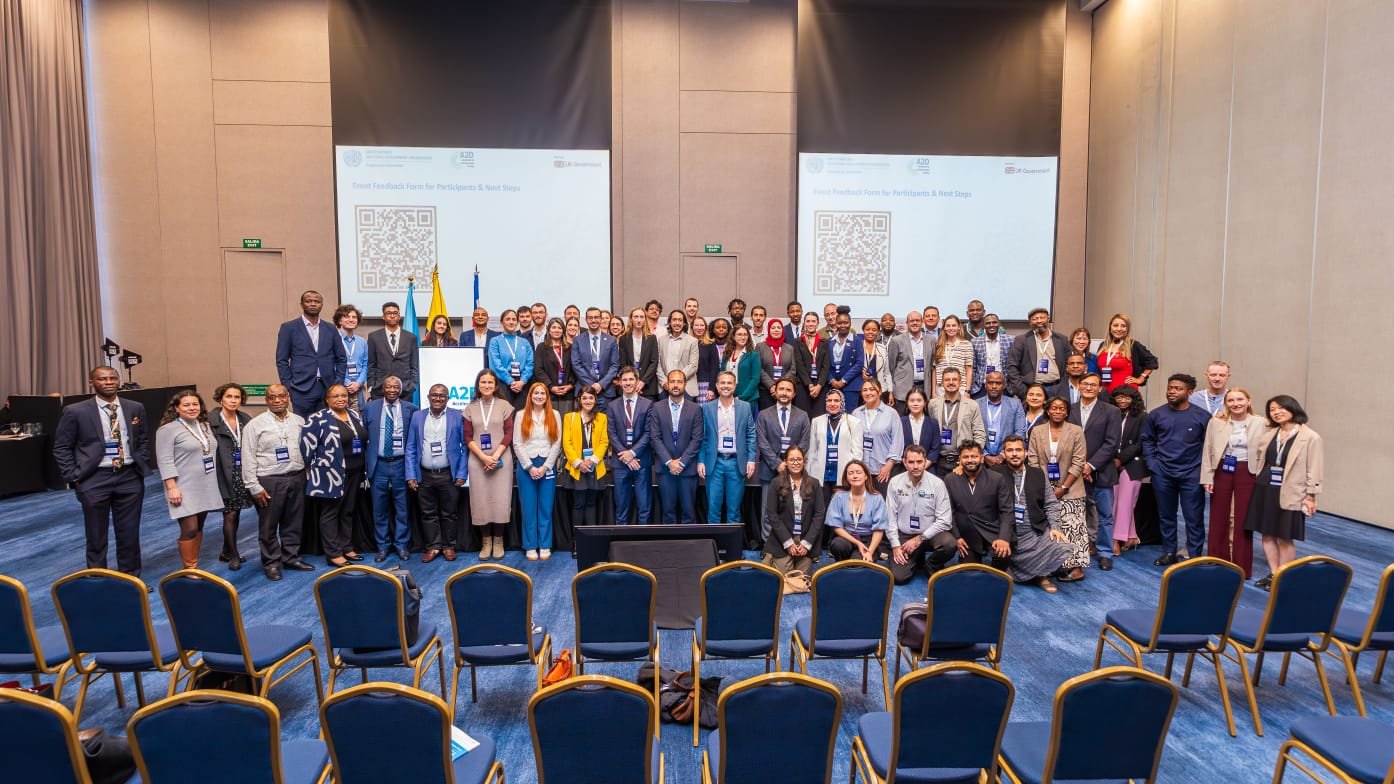
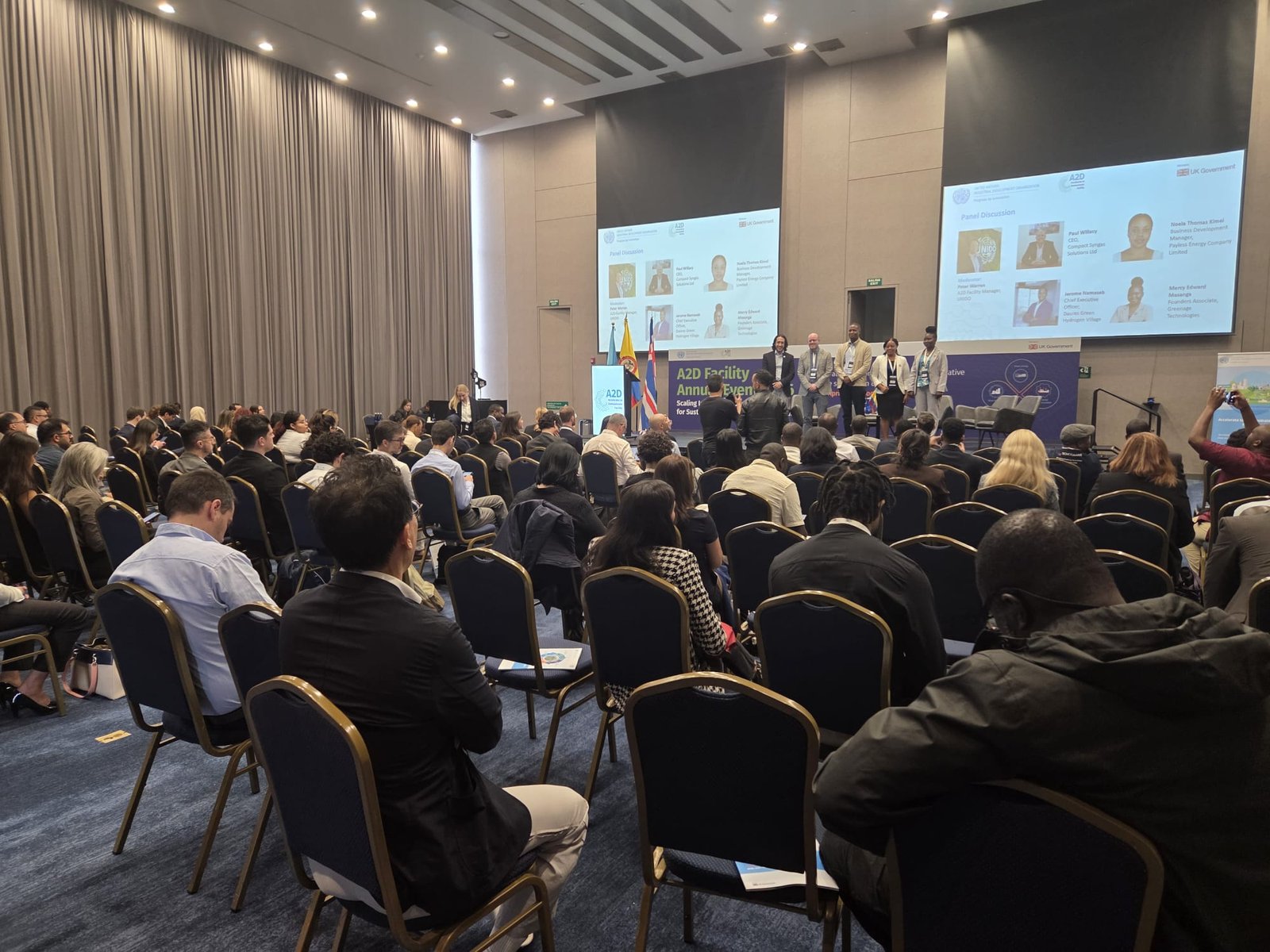
Bogotá Annual 2026
4 Days
4 Key Topics
SDG 9, 17
01 · Solar collectors
Absolicon T160 collectors
Absolicon T160 collectors concentrate sunlight onto a vacuum receiver tube, delivering heat-transfer fluid at up to 160°C. Direct thermal conversion avoids the efficiency losses of PV plus electric boilers, with roughly three-quarters of incoming solar energy becoming usable heat. The reflector, receiver and nano-coated glass are the IP-protected core, while frames, mounts and tracking hardware are locally fabricated.
02 · PCM storage
Solar steam boiler + food-grade PCM battery
A horizontal steam drum coupled to a PCM grid with an internal heat-transfer tube bundle. Melting at 85 °C, the PCM stores and releases latent heat at a near-constant temperature, stabilising compressor suction despite cloud cover. Corrosion-resistant cladding, pressure-rated casing and refill ports support maintenance. This enables 24/7 clean steam and resilience during load-shedding.
03 · Vapor compression
Three-stage R718 mechanical vapour compressor
The heart of the system and largest cost, MVC compresses low-pressure vapour to raise its saturation temperature and pressure, recovering latent heat through condensation instead of burning more fuel. R718 uses water as the working fluid zero GWP, zero toxicity and no refrigerant regulation exposure. Oil-free impellers provide high compression ratios per stage, supported by VFDs, electrical panels, back-pressure regulators, Modbus motorised valves and safety instrumentation.
04 · Feedwater preheat
Peltier Thermoelectric Heat Pump
Solid-state modules use DC current across semiconductor junctions to pump heat from cold to hot, with no refrigerant or moving parts. They preheat municipal water from 25 → 85 °C in a closed loop with make-up and condensate return, while the ~20 °C rejected side returns to the cold-water grid. This delivers feedwater at the PCM melting point, reducing the PCM boiler’s required thermal lift.
05 · Monitoring & billing
SCADA, IoT & digital twin
The business model is enabled by centralised SCADA with skid-level panels, AI dispatch optimising solar charging, PCM discharge and compressor operation, and predictive failure detection. Remote dashboards support Broadreach, RFG and maintenance teams, while verified SCADA data feeds usage-based billing APIs, turning the boiler retrofit into a service contract. Verification uses certified steam, temperature, pressure, electricity and solar instrumentation, with hashed logs and monthly ultrasonic cross-checks.
Team & Contacts
A team of complementary expertise

[contact name]
Consortium Lead
Coordinates the consortium end-to-end and integrates the Peltier heat pump with PCM thermal storage across Skids 02–04.
[contact name]
MVC Engineering Lead
Designs, builds and commissions the three-stage R718 mechanical vapour compressors and PCM batteries on Skids 03 and 04.
[contact name]
EPC Lead
Local EPC lead — site works, skid installation, and community engagement at Groot Drakenstein and future replication sites.
[contact name]
Solar Collector Lead
Supplies the T160 collector field on Skid 01 and leads solar-to-steam integration engineering and installer training.
[contact name]
Systems & Digital Lead
Systems engineering across all four skids, SCADA and digital twin development, and usage-based billing verification.
[contact name]
Commercial Lead
Structures and finances the Heat-as-a-Service contract; owns and operates the asset off-balance-sheet for RFG over a 20-year term.
[contact name]
GESI Lead
Designs and monitors the GESI action plan, delivers technical training, and tracks social performance indicators across the consortium.